
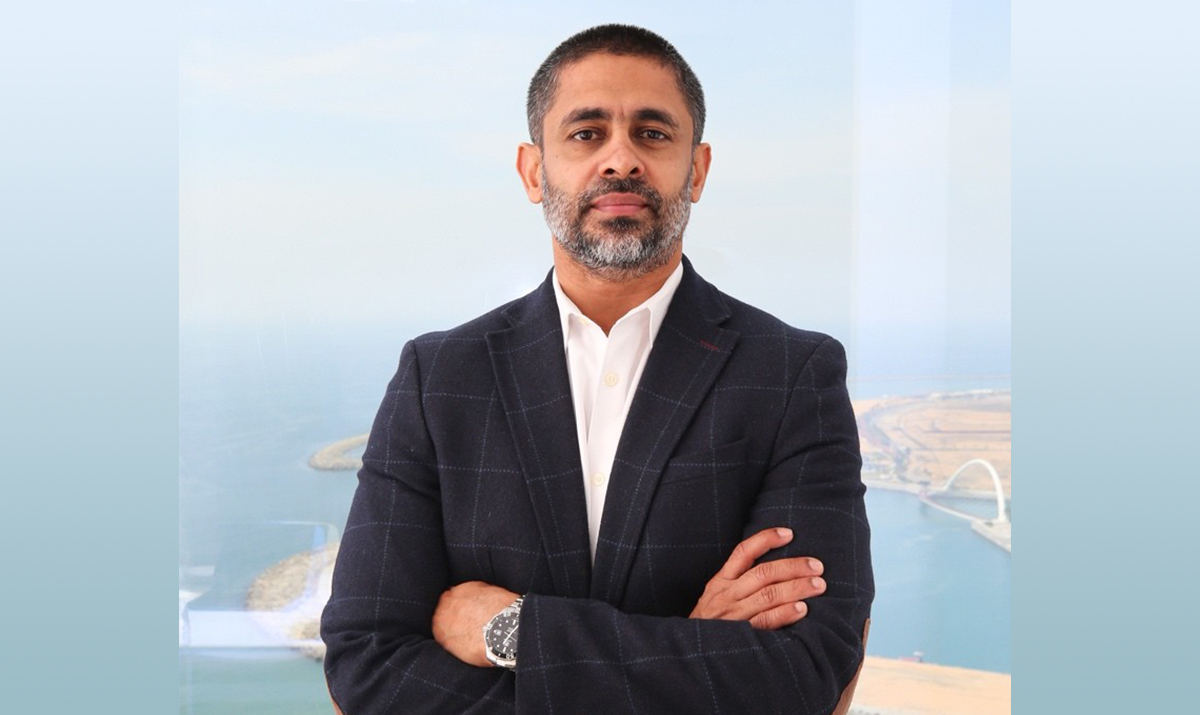
28 Jan Interview with Thulci Aluwihare, Deputy Managing Director, CHEC Port City Colombo, Sri Lanka
From your perspective, what is the core strategic ambition behind Port City Colombo and how does it reposition Sri Lanka within regional and global investment flows?
Special Economic Zones are not new to Sri Lanka; we are familiar with light manufacturing zones under the Board of Investment. However, Port City Colombo is the country’s first multi-services-oriented export zone. This is significant because nearly 60% of Sri Lanka’s GDP comes from services and service exports. Unlike larger economies, Sri Lanka does not have a demographic dividend, so growth depends on accessing international markets. Port City Colombo provides a strategic platform to serve South and Southeast Asia and, given our central position in the Indian Ocean, the Far East, the Middle East and West Africa along one of the world’s busiest shipping routes.
Initially conceived as a waterfront real estate project, Port City Colombo evolved into a vision for a modern services hub with progressive regulations designed to attract global businesses. It is Sri Lanka’s largest public-private partnership. CHEC Port City Colombo (Pvt) Ltd., which I represent, is the project company and investor. We have invested close to $1.3 billion to date, out of an initially committed $1.4 billion, to reclaim 664 acres of land and deliver the full horizontal infrastructure, while ownership of the land remains with the Government of Sri Lanka.
Port City Colombo is annexed to Colombo’s administrative district and governed by the Colombo Port City Economic Commission, a seven-member body appointed by the president to regulate and administer this new city. The vision was to go beyond a real estate project and create a Special Economic Zone that addresses key challenges: access to new markets, foreign capital and global talent, because where talent goes, capital follows. Port City Colombo has been positioned as a competitive regional hub for South and Southeast Asia, drawing from successful global precedents such as the Dubai International Financial Centre, which operates as a ring-fenced Special Economic Zone with its own legal framework and, despite its financial-centre branding, hosts more than half of its companies in non-financial services.
Adopting a similar model, Port City Colombo is designed as a multi-services export zone, with financial services as one key vertical among several. The project has also been extensively benchmarked against leading global SEZs including Singapore, India’s GIFT City and Labuan in Malaysia, in consultation with some of the world’s most reputed strategic consulting firms and international property consultants such as BCG, EY, PwC, JLL and CBRE. While South Asia presents significant growth potential, it is often perceived by global investors as complex to navigate due to fragmented approvals, regulatory uncertainty, currency controls and slower dispute resolution mechanisms; Port City Colombo was purpose-built to address these challenges by creating a ring-fenced, globally benchmarked business environment within the region.
Port City Colombo’s master plan provides for over 1,500 acres of built-up space across commercial, residential, hospitality, leisure and institutional uses. The city is structured into five distinct precincts, each serving a defined economic function: the Financial District for Grade-A offices and financial services; Central Park Living focused on high-quality, green urban residences; International Island dedicated to healthcare, education and an integrated resort; the Marina precinct featuring a luxury yacht terminal and waterfront leisure offerings; and Island Living, comprising low-density luxury waterfront residences.
What have been the most decisive factors driving early FDI commitments to the project and which sectors are currently showing the strongest investor momentum?
To attract international investors, we offer a strong mix of fiscal and non-fiscal incentives focused on making it easier to do business. One major risk we address is currency risk, which is common across South Asia. Within Port City Colombo, the Sri Lankan rupee is not legal tender. Instead, we allow transactions in 16 Central Bank–approved currencies, including the U.S. dollar, British pound and Indian rupee. This provides a full hedge against currency depreciation and allows investors to transact and repatriate capital and profits freely in foreign currency. On the fiscal side, investors benefit from a 10 to 15-year corporate tax holiday, exemptions on import and border taxes for construction materials, resulting in roughly 15-25% cost savings, and a further tax holiday once commercial operations begin. Together, these incentives significantly improve investor returns and overall project viability.
Another key risk we address is restrictions on foreign ownership and employment, which are common in the region. Within Port City Colombo, companies can be 100% foreign-owned, with no limits on the number of foreign employees. Foreign professionals are eligible for five- to ten-year visas. All approvals are handled through a single-window regulator, the Colombo Port City Economic Commission. We also have an International Commercial Dispute Resolution Centre within Port City Colombo, ensuring disputes are resolved under international standards. Together, these frameworks support the free movement of capital and talent and are designed to attract global investors. To date, we have secured over $1 billion in third-party investments, in addition to our own investment in land reclamation. These include a world-class yacht marina — one of the most promising in South Asia — which will serve as an international-standard stopover for yachts traveling between Europe and the Maldives. We also have major residential developments, the Colombo International Financial Centre as a mixed-use project with residential, retail and office components and, launched last year, South Asia’s first downtown duty-free retail outside an airport. This reflects our aim to position Sri Lanka not only as a leisure destination, but also as a shopping and lifestyle hub for international visitors.
Investment at Port City Colombo spans residential, commercial, retail, marina, hospitality and lifestyle developments. To drive demand, especially for offices and residential space, it is critical to attract global companies that can use Port City Colombo as a base to access South Asia. To date, nearly 150 companies are licensed under the Colombo Port City Economic Commission Act, with another 50-75 applications in the pipeline. Most are IT-enabled services firms, a strong sector for Sri Lanka, alongside headquarters, trading and professional services firms such as Deloitte and KPMG. Based on this momentum and development pipelines, we expect to attract an additional $1 billion in real estate-related FDI over the next 12-24 months.
Port City Colombo is structured to attract capital across finance, services, logistics, lifestyle and innovation-driven sectors. Could you highlight the current status of flagship projects and anchor developments within the different precincts?
Key flagship developments include the Marina and Marina Residences, the ICONIC Hotel, the Colombo International Financial Centre with a further $500 million investment, a dedicated convention and exhibition center, as well as an international hospital, school and university.
Together, Port City Colombo is designed as a fully integrated, modern extension of Colombo’s existing Central Business District. There is strong investor interest across these projects and we expect construction on most of them to begin within the next 12-24 months, attracting close to $1 billion in investment. Looking ahead, 2026 will be a pivotal year. Sri Lanka has recovered from the balance-of-payments crisis of recent years: inflation is now in single digits, reserves have stabilized, exports and tourism are growing and foreign inflows are returning. These improving macroeconomic fundamentals strongly support the next phase of investment momentum for Port City Colombo.
Digital infrastructure and sustainability principles are embedded into the master plan, reflecting a deliberate effort to build a future-ready city aligned with global ESG and smart-city standards. How is digitalization being applied to regulatory processes, investor onboarding and day-to-day city management to improve efficiency and transparency?
ESG is central to the development of Port City Colombo, with the master plan originally designed by SWECO of Sweden and refined by Surbana Jurong of Singapore to meet global, future-ready benchmarks. Of the project’s 664 acres, nearly one-third — approximately 220 acres — is dedicated to open spaces, including green areas, parks and public beaches, with close to 100 acres allocated specifically to landscaped green space, reflecting a deliberate intent to avoid a high-rise concrete jungle and instead create a balanced and sustainable urban environment.
Conceived as an integrated ecosystem for living, working and learning, the city’s building heights, orientation and overall layout are carefully planned to optimise natural ventilation, reduce energy consumption and respond to coastal and climate considerations. In line with the Surbana Jurong master plan, Development Control Regulations were established covering urban design, planning, utilities, landscaping and, critically, sustainability. The sustainability framework, developed by Atkins in the United Kingdom, sets mandatory standards for all investors and developers, including a minimum LEED Gold certification and strict green building requirements. To encourage excellence, developers are offered incentives such as the ability to build up to a 5% bonus gross floor area if they exceed the minimum landscaping requirements per plot and achieve the highest green building certification as recognised by the US Green Building Council. These sustainability requirements are enshrined in law following approval by Parliament and all developments within Port City Colombo are required to fully comply.
On digitalization, the Colombo Port City Economic Commission operates as a single-window investment facilitator, with all applications submitted online. Foreign investors can complete the entire process remotely, without needing to visit Sri Lanka. We are further integrating digital interfaces with immigration and other government agencies through the Commission’s platform, making approvals faster, more efficient and fully coordinated through one window.
How do you evaluate Port City Colombo’s role in reshaping Sri Lanka’s international investment and business narrative and how do you expect it to shape Sri Lanka’s investment outlook and economic integration over the next three to five years?
Sri Lanka is a relatively small economy, with a GDP of around $100 billion. Based on an independent PwC economic impact assessment, once fully operational, Port City Colombo is expected to inject close to $14 billion annually into Sri Lanka’s economy — equivalent to approximately 15% of GDP in today’s context. To date, we have invested about $1.4 billion, with a further $15 billion required to complete the master plan.
Beyond this one-off capital infusion, the long-term impact is significant. Construction has already created around 3,000 jobs, and based on independent studies and current master plan projections, once fully operational, Port City Colombo is expected to generate over 80,000 jobs and support a transient population of about 270,000. With international schools, universities, hospitals and global IT firms already present, our ambition is to attract more multinational companies and position Port City as a regional hub for South Asia, effectively building a Singapore-style ecosystem for the region.
CHEC has been present in Sri Lanka since 2005, initially as an EPC contractor delivering major roads, bridges, ports and reclamation projects. With deep experience in the country, CHEC has now moved up the value chain as a developer, investing its own capital and taking commercial risk through Port City Colombo. This is a critical moment for Sri Lanka. While the economy is recovering, public-sector fiscal space is limited, making private foreign capital essential. Even before vertical development is complete, around 150 licensed companies are already operating from Colombo, occupying nearly 500,000 square feet of office space, providing a much-needed boost to the local real estate market after COVID.
What is your top priority next year that would make you especially proud to accomplish and what is your final message to the investors who are reading this interview?
Securing internationally branded institutions — particularly a school, university and hospital — is a key strategic priority for us and there is strong interest from well-known global brands. Achieving this is one of our main goals for next year. While hotels, offices and residential developments will naturally follow, attracting these international brands is essential to positioning Port City Colombo as a truly multicultural, globally appealing city.
Sri Lanka, often called the Pearl of the Indian Ocean, offers an exceptional quality of life, with Colombo representing the country’s transition from recovery to growth. Port City Colombo offers global investors a cost-competitive alternative hub, with the cost of doing business around one-fifth of Singapore and one-quarter of Dubai, within a livable, diversified, live–work–learn urban environment.
Sorry, the comment form is closed at this time.